
Section 08: Tech Infrastructure Metrics
Higher Education
One of the essential components of infrastructure for a knowledge-based economy is a skilled labor force
Tech occupations often require STEM degrees for entry-level positions.
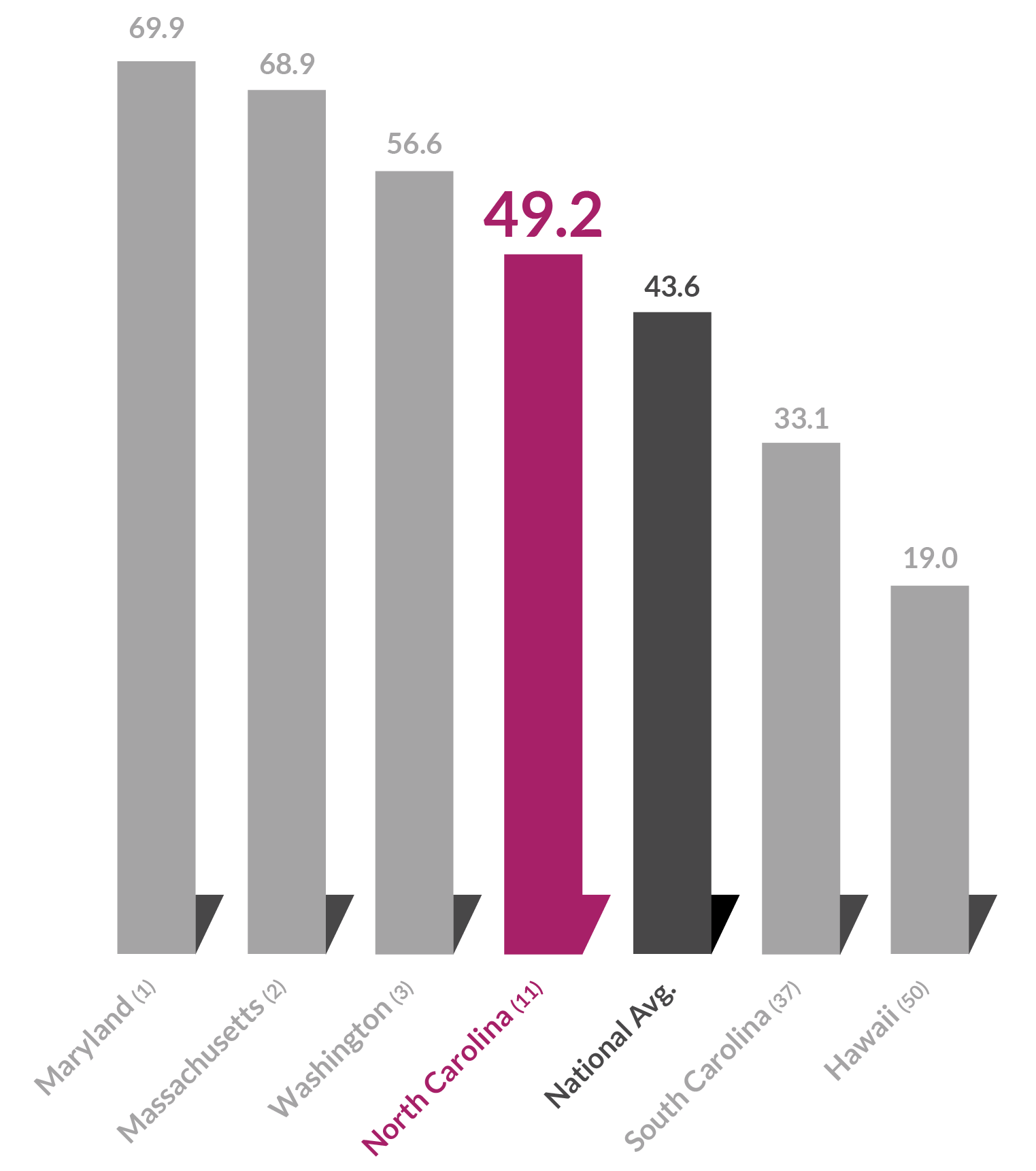
In 2024, North Carolina students completed 26,975 STEM-focused education programs
This value is standardized by the number of enrolled postsecondary students in each state, and North Carolina averaged about 49 completed STEM programs per one thousand students. This rate is higher than the national average, and the state ranks #11 an improvement of one spot in this year’s report.
Source: EL calculations based on Lightcast 2025.4 and National Center for Education Statistics (2024)
Completed STEM Education Programs Per 1,000 Enrolled Students, 2024
Percent Change in Stem Education Program Completions, 2019-2024
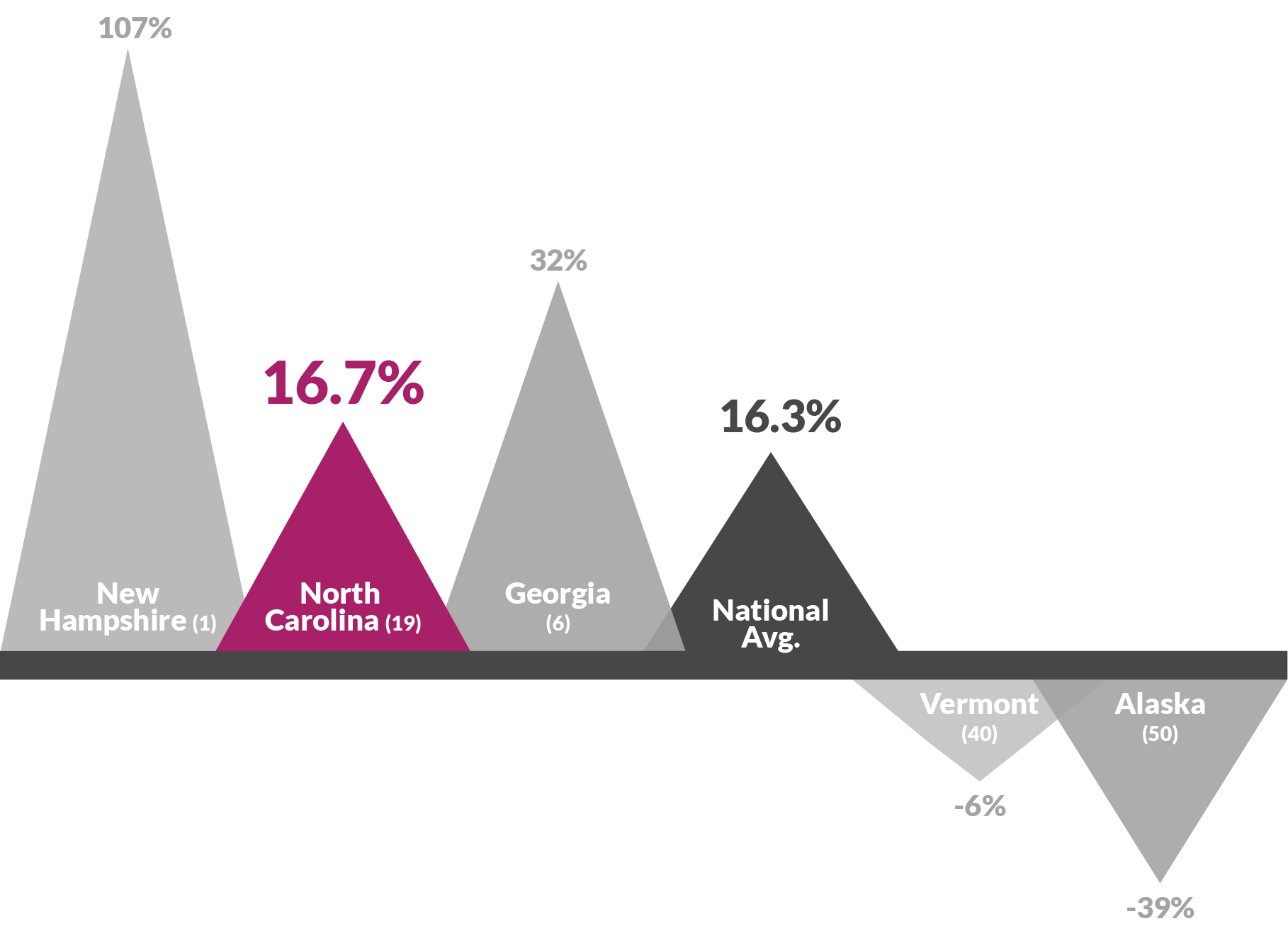
The change in STEM program completions from 2019 to 2024 shows that North Carolina experienced an increase of 17%
Over the past few years, many states have focused on increasing the number of STEM students in their educational systems. After several years of continued improvement in this ranking, North Carolina dropped several places—from #3, #5, and #13 in the last three reports—to a #19 ranking in this year’s report. The state’s rate of STEM program increases remains above the national average.
Source: EL calculations based Lightcast 2025.4
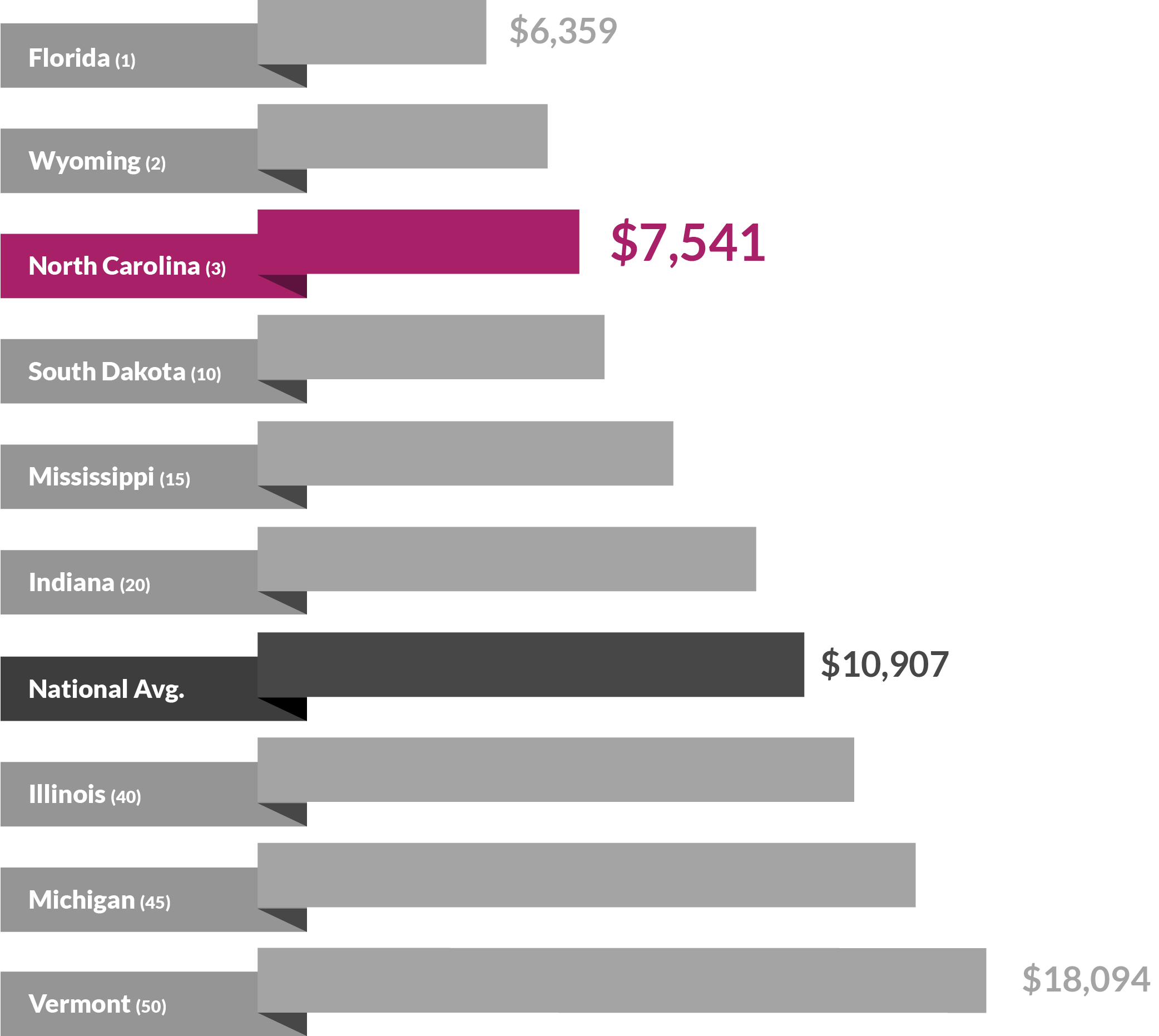
the average cost of one year of in-state tuition for the 2025–2026 school year is $7,541 in North Carolina
Students today are increasingly seeking education options that minimize debt burden. North Carolina ranks highly for offering low-cost, high-quality higher education. The state has consistently ranked in the top ten for this metric throughout the history of this report and retained its #3 ranking from the previous year.
Source: College Board (2025)
Average In-State Public 4-year Tuition, 2025-2026
State Spending on Higher Education Per FTE Student, 2024
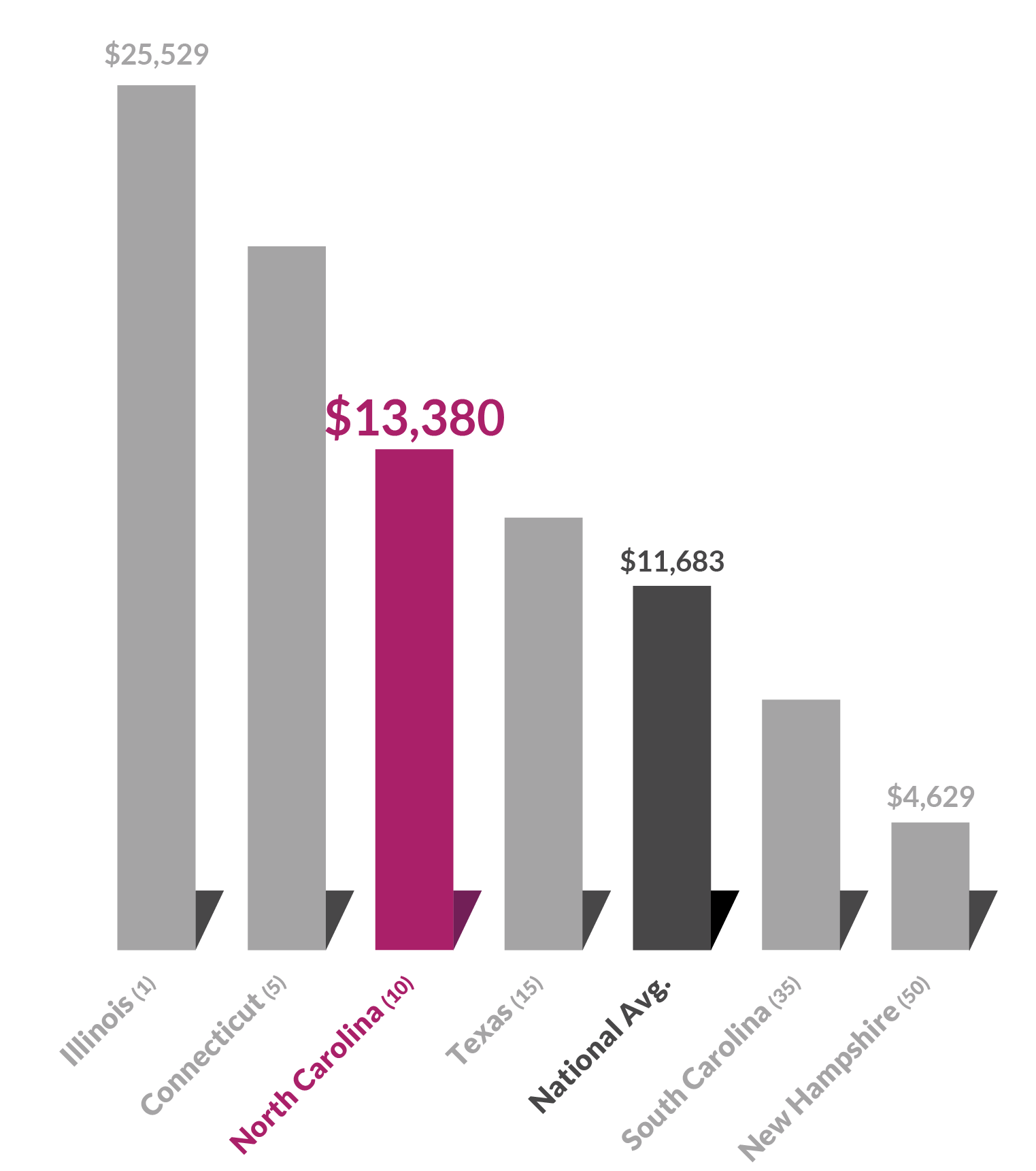
In 2024, North Carolina provided approximately $1,700 more in state funding per full-time student than the national average
Public tuition levels are closely tied to state funding. After the Great Recession, state revenues declined nationwide, leading to reduced higher education funding and annual tuition increases of roughly 9 percent from 2007–08 to 2011–12. In the post-pandemic period, enrollment declines and rising affordability concerns have continued to shape tuition trends. Nationally, the annual rate of increase in public tuition has averaged about 2% in recent years.
The state has frequently ranked within the top 15 for this metric and placed #10 in this year’s report.