
Section 08: Tech Infrastructure Metrics
Broadband Access
High-speed broadband is a foundational requirement for a knowledge-based economy and a key indicator of statewide connectivity
This section will explore North Carolina’s Broadband Access compared to all other states. Metrics include Access to Affordable Broadband, Access to High-Speed Broadband, Households Without Internet Subscriptions, and Percentage of Workers Working from Home.
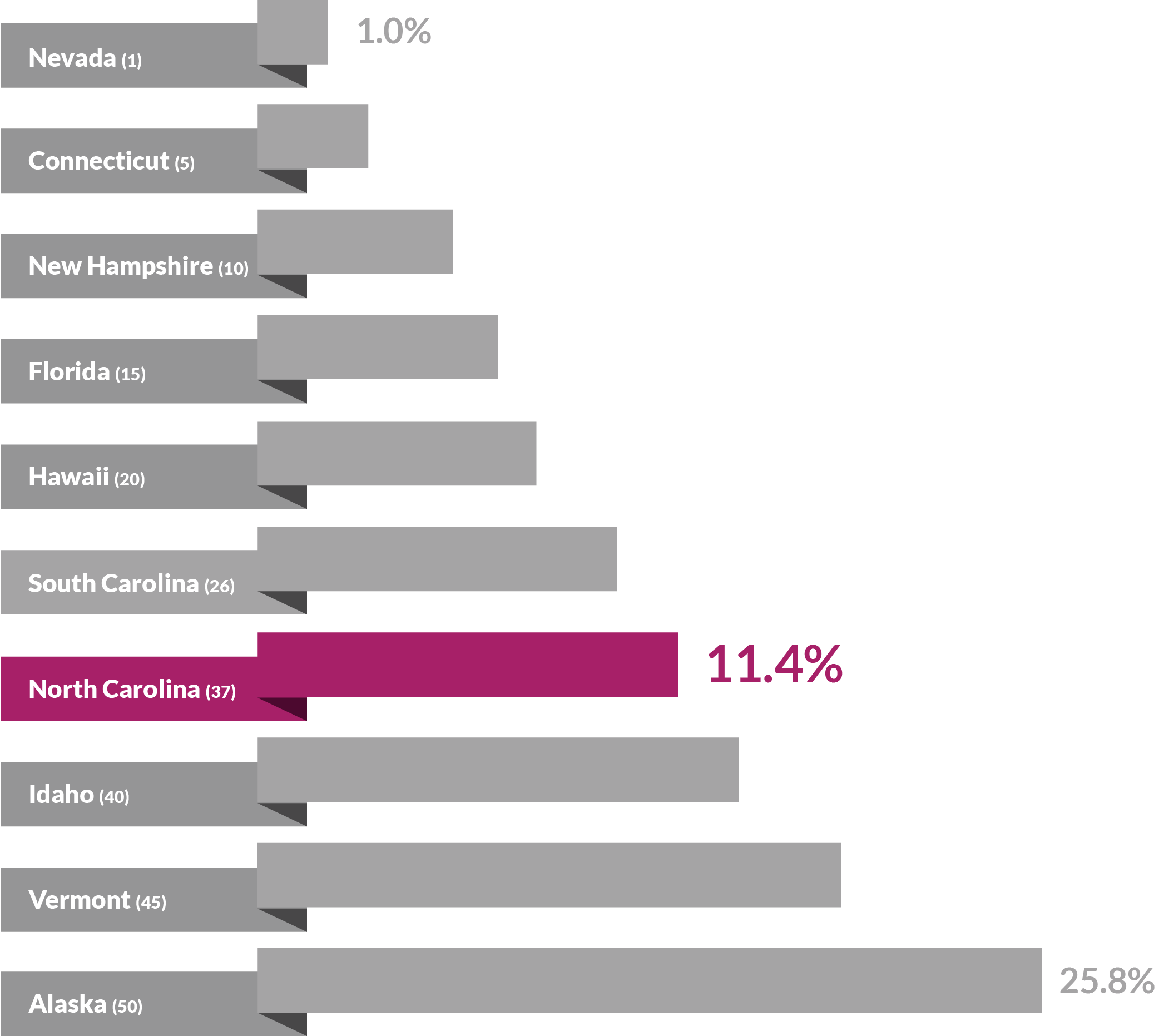
According to BroadbandNOW Research, 11.4% of North Carolina’s population lacked access to high-speed broadband
Access is the first step to ensuring that residents can fully participate in the information economy. This placed the state at #37 in the nation.
Source: BroadbandNOW Research (2025)
Percentage of Population without access to high-speed broadband, 2025
Percentage of Population without access to affordable broadband, 2025
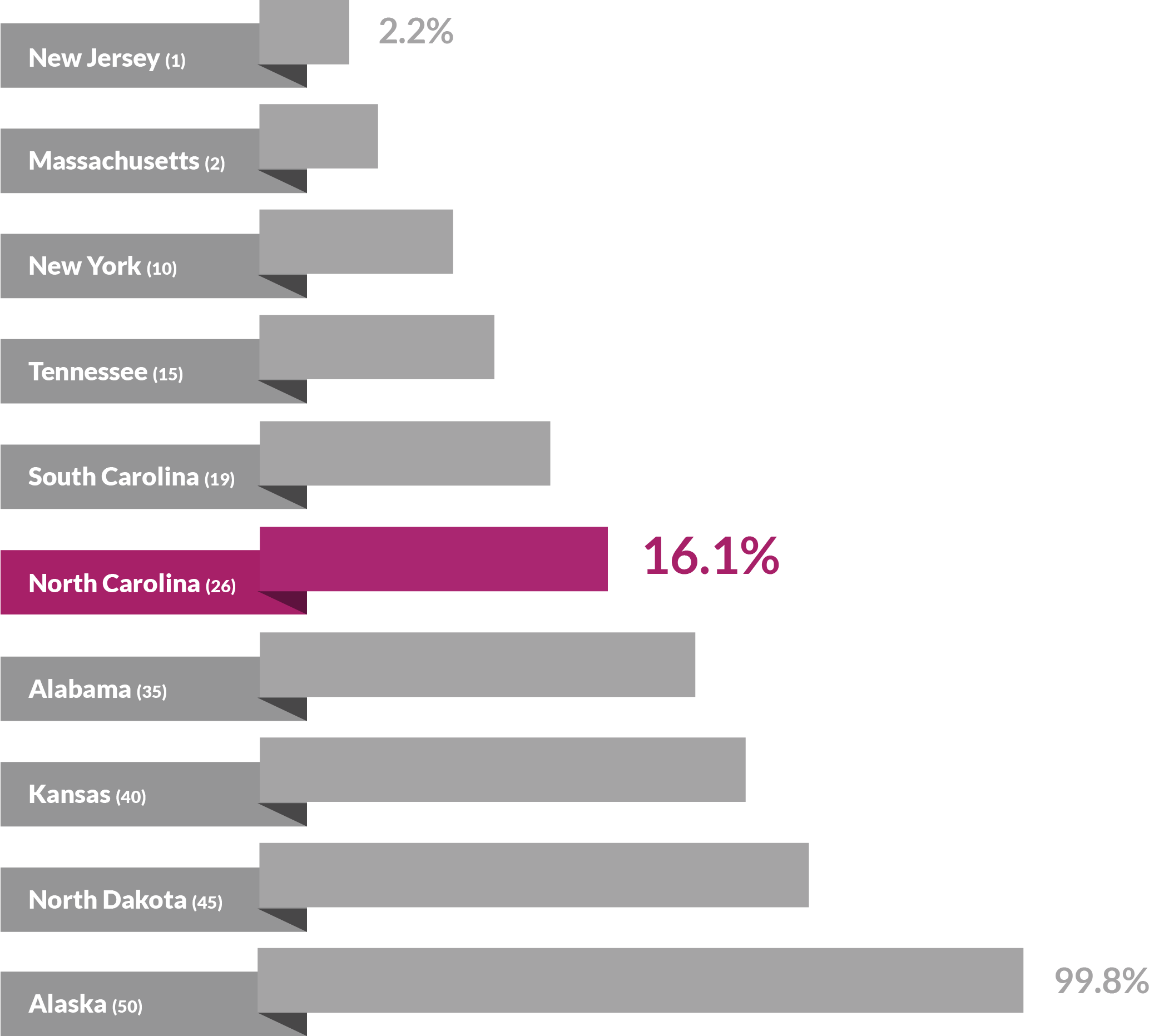
About 16% of North Carolinians do not have access to affordable high-speed broadband
The availability of broadband must be paired with adoption to ensure that all households are connected. Research has shown that adoption is more closely tied to economic benefit than availability alone, and the central factor influencing adoption is affordability. In 2025, affordable plans were defined as those costing under $60 per month. When affordability is assessed, North Carolina ranks #26, higher than its ranking for overall broadband access. This suggests that broadband pricing is helping support adoption across the state.
Source: BroadbandNOW Research (2025)
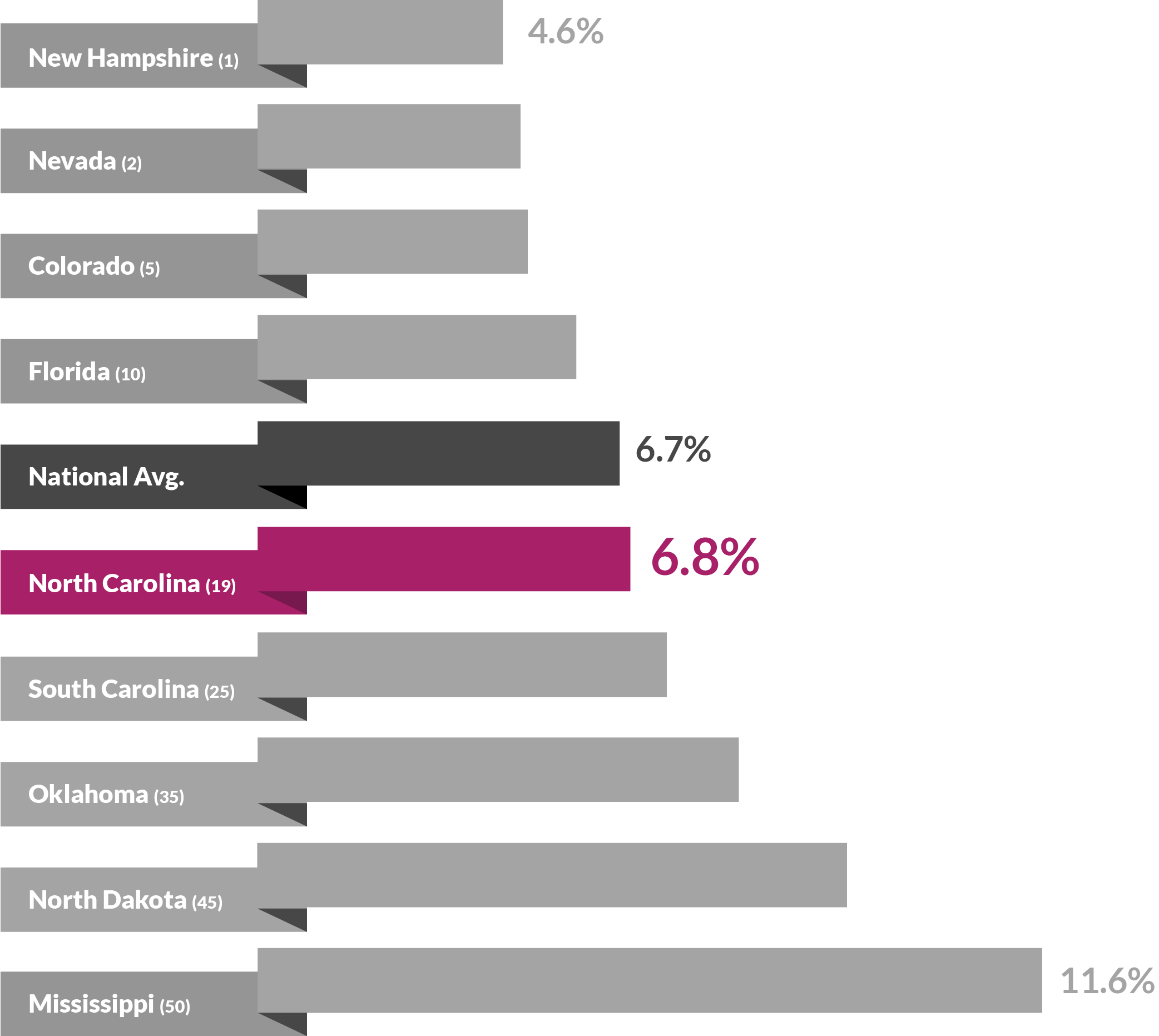
In North Carolina, an estimated 6.8% of the population lacks an internet subscription
Another measure of adoption comes from Census Bureau surveys that track the number of households with internet subscription services. This metric shows a significant improvement from 8.3% in the previous year. This progress moved North Carolina from #32 to #19 in the national rankings.
Source: US Census Bureau (2025)
Percentage of households without an internet subscription, 2024
Percentage of workers working from home, 2024
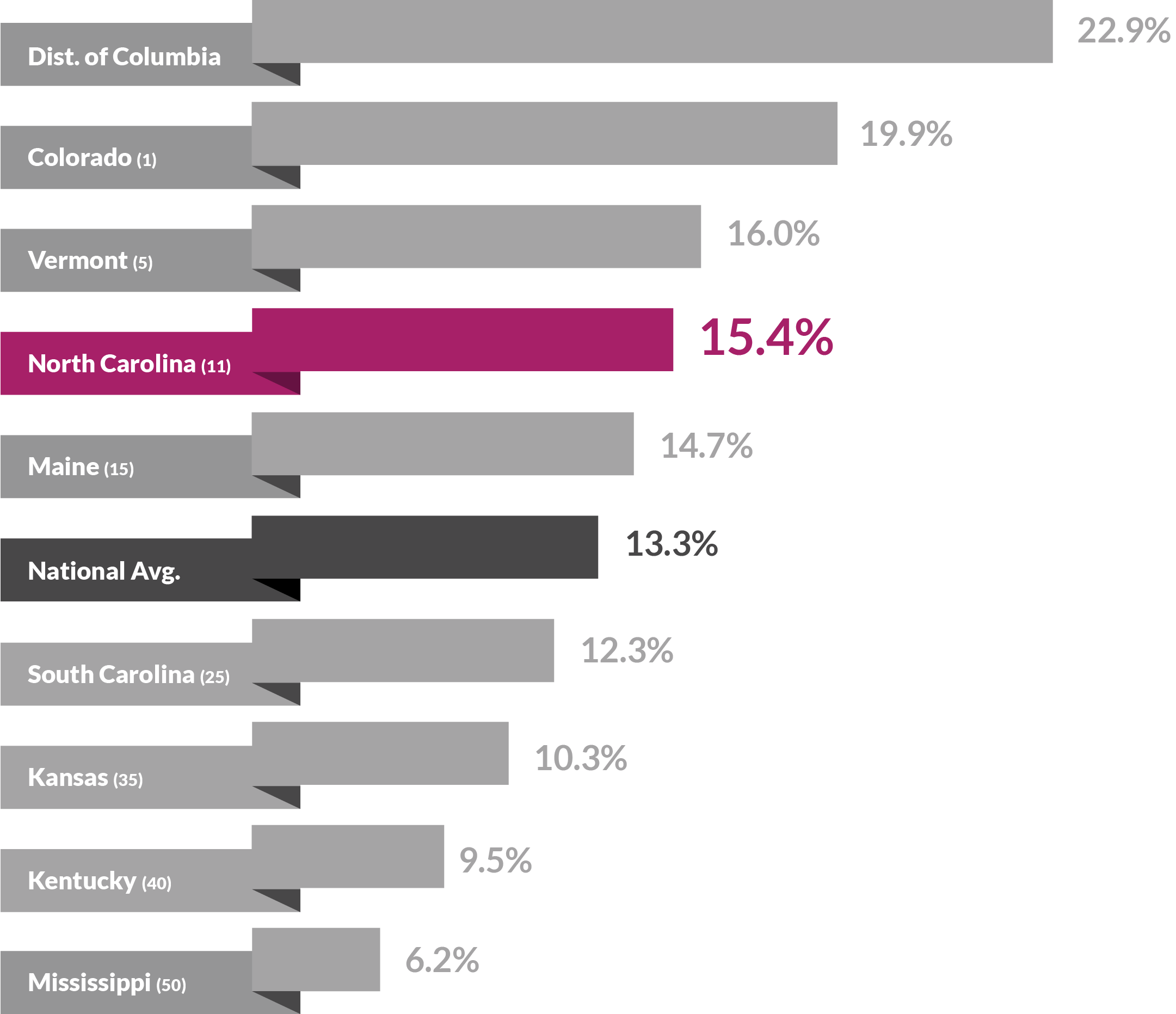
In 2024, the share of workers working from home declined slightly from the previous year but still accounted for about 15% of the workforce
This was the #11 highest rate among states and about two percentage points higher than the national average.
High-speed broadband can help connect rural workers and others to the knowledge-based economy. When reliable broadband is available, more workers are able to work from home, allowing the tech workforce to expand. Individuals who might not otherwise have been able to participate in the workforce—such as people with disabilities—can now access jobs through remote work.