Section 08: Tech Infrastructure Metrics
Cost of Living
North Carolina has attracted many new residents in recent years
One downside of this growth is its impact on the cost of living. Housing prices have risen sharply, putting increasing pressure on affordability. Despite these rising costs, the state still retains a cost-of-living advantage compared to many of the highest-cost states in the Northeast and the West.
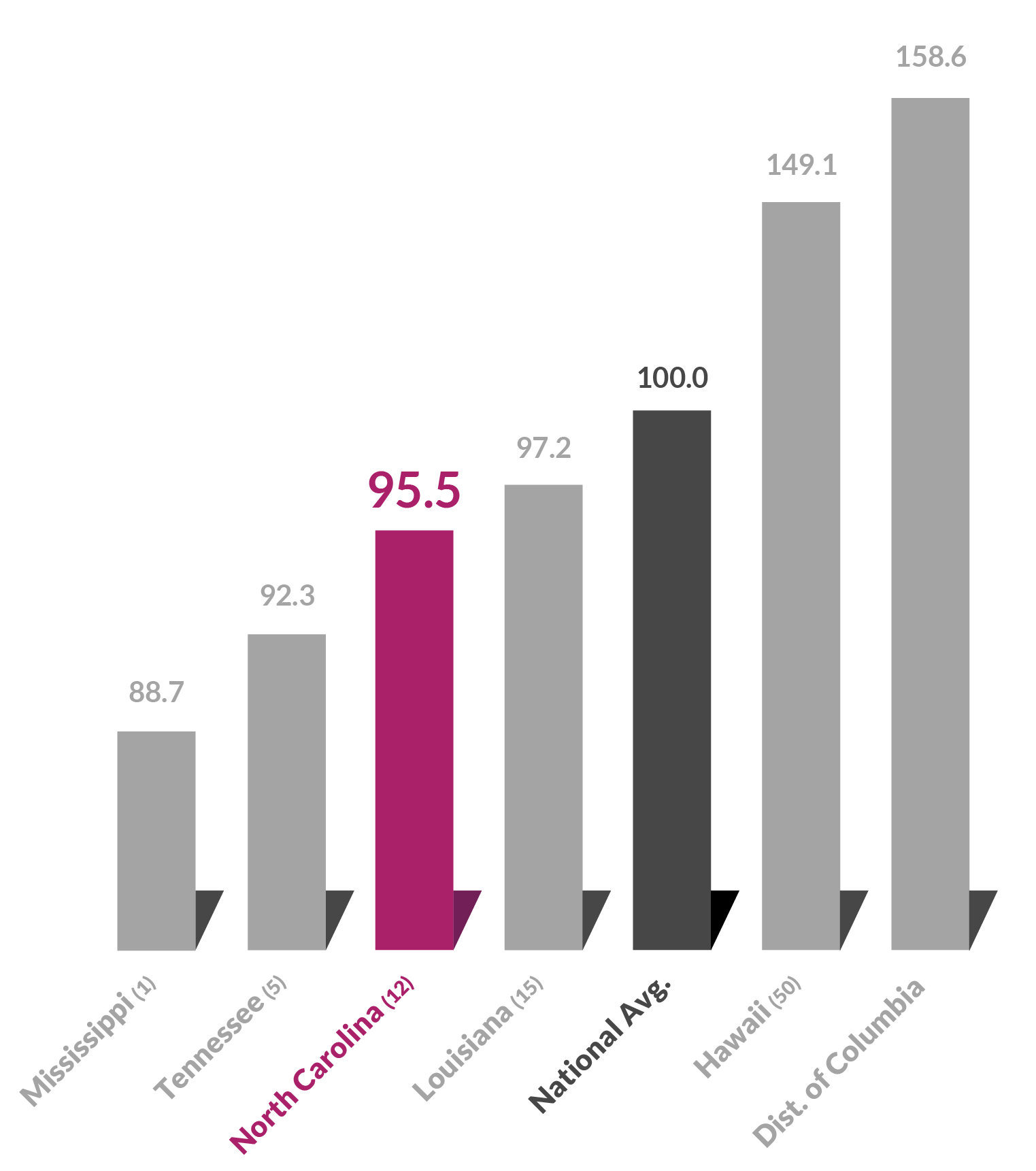
North Carolina had the #12 lowest cost of living in the nation
Slipping one place in the rankings compared to last year, highlighting the importance of managing growth while preserving affordability.
Source: Lightcast 2025.4
Cost Of Living Index, 2024
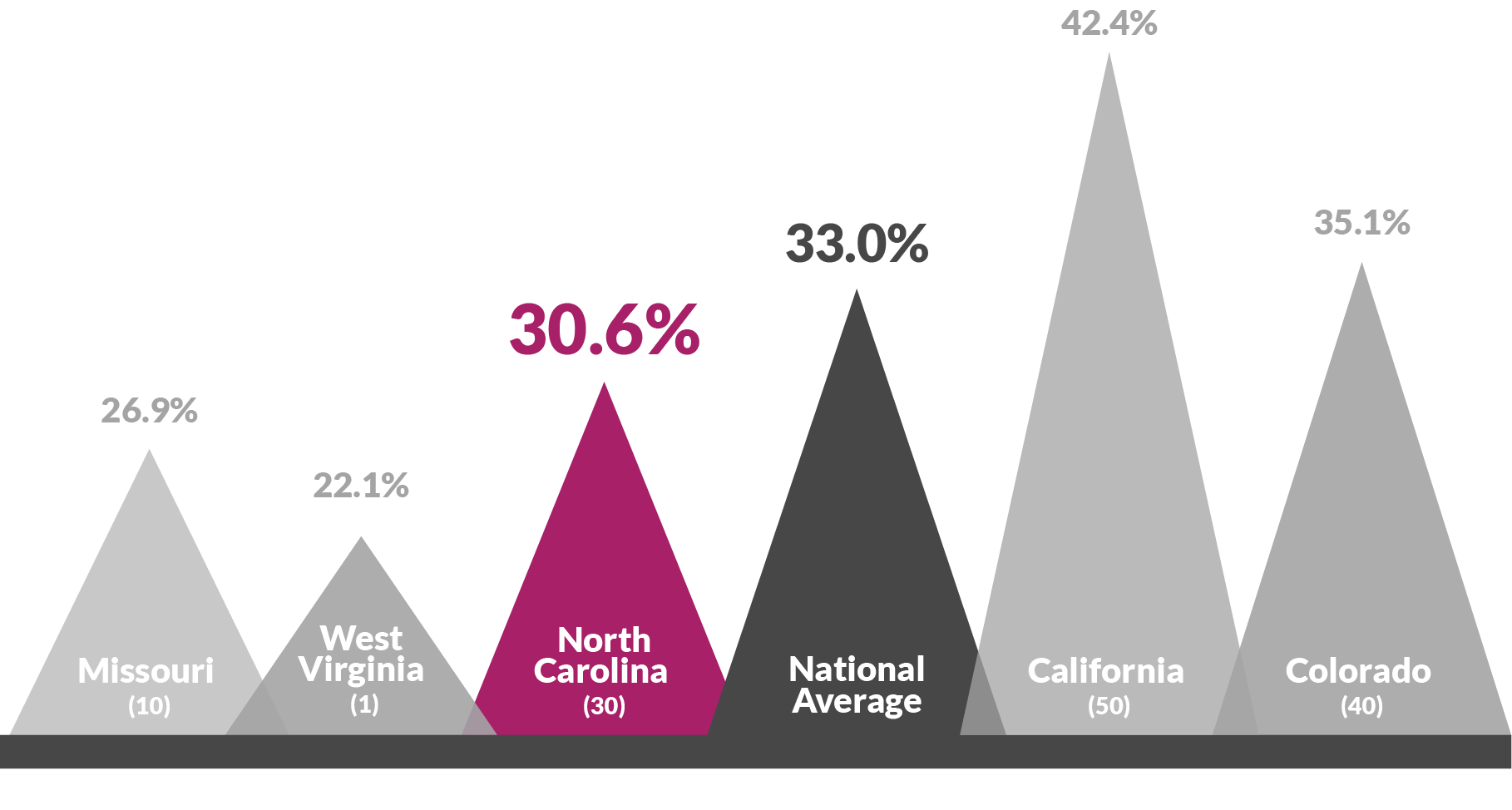
Share of Housing Burdened Households, 2024
In 2024, about 31% of households were considered housing burdened
Defined as paying more than 30% of household income on housing. In 2022, this rate was 28%. As the housing burden has increased for North Carolina residents, the state dropped in the rankings from #25 to #30 this year. However, the state remains in a better position than the national average and many other high-cost states.
Source: US Census Bureau (2025)

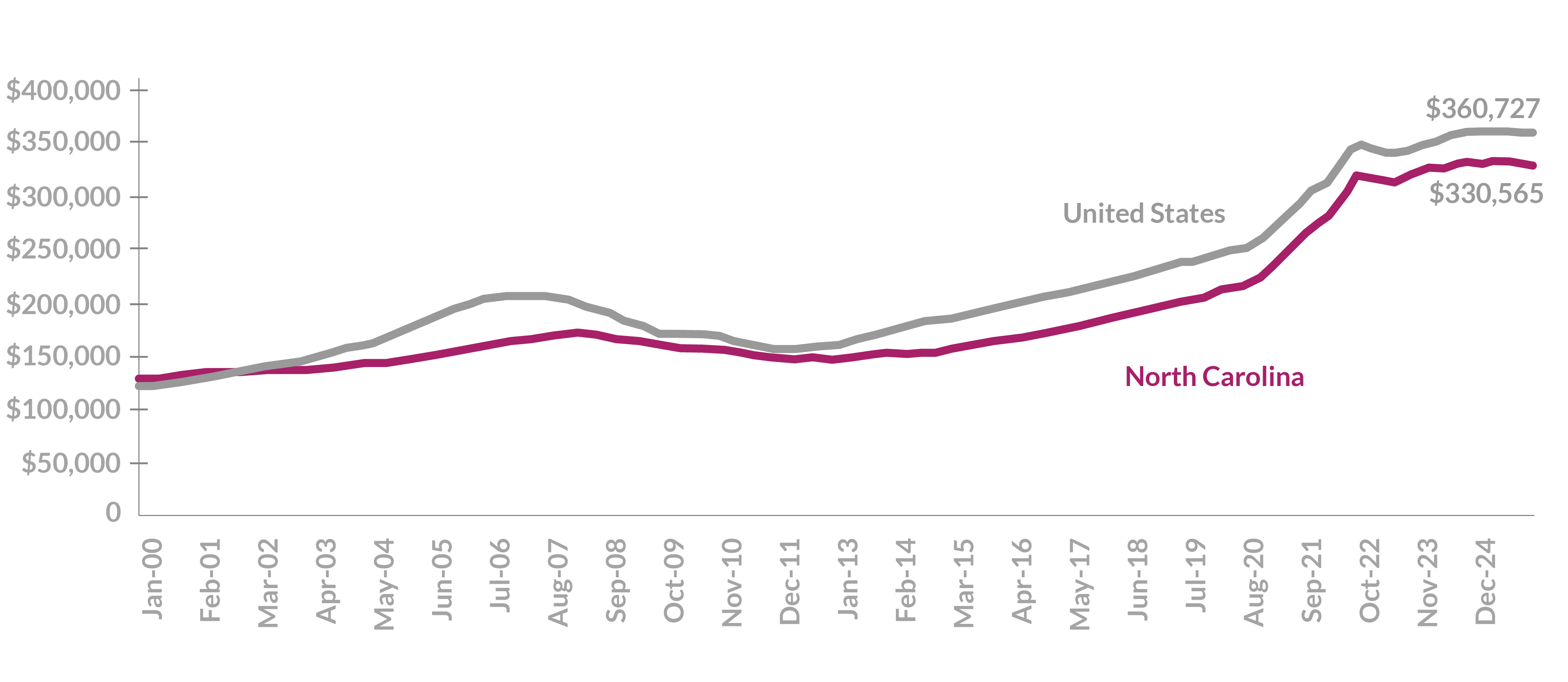
Typical Home Value
North Carolina home prices had been rising at a rate similar to the national average before the pandemic. After the pandemic, this trend became even more pronounced. Once the Federal Reserve began fighting inflation with interest rate increases, the real estate market stabilized. Since that time, home values have remained steady. North Carolina’s average home price still remains below the national average.