Section 07: Artificial Intelligence

Long Term Impacts

While the long-term impacts of AI on highly exposed jobs remain uncertain, recent data suggest that early-career workers may already be experiencing reduced opportunities

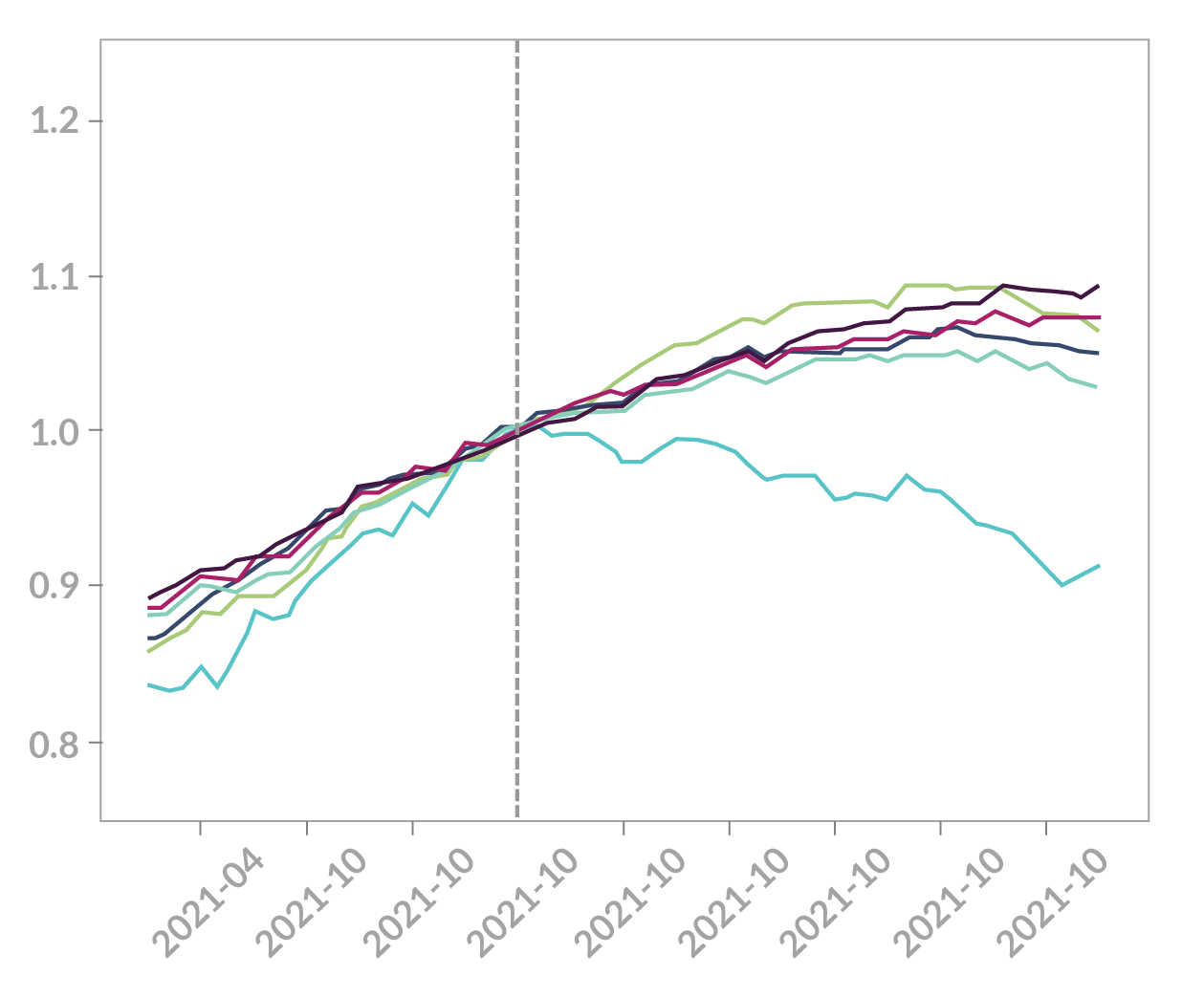
In the paper “Canaries in the Coal Mine: Six Facts about the Recent Employment Effects of Artificial Intelligence,” Stanford researchers found evidence that employment levels for younger workers have declined since the introduction of LLMs.

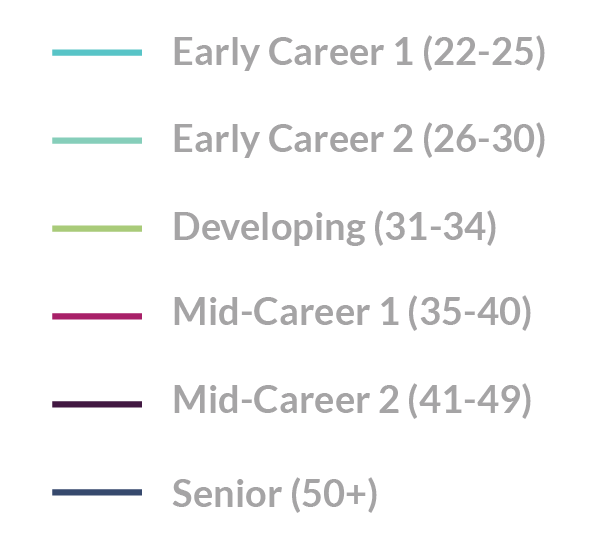
Headcount Over Time by Age Group
Computer Occupations (Normalized)

04 headcount over time comp occ 01
04 headcount over time comp occ 02
Source: Brynjolfsson et al. (2025)

This report also uses the GPT Beta exposure score from the Eloundou et al. study. Exposure scores were compared with recent national payroll data from ADP. The research found that in the most highly exposed occupations, early-career headcounts have shifted downward since the emergence of ChatGPT and other LLM tools. These findings remained consistent even after researchers accounted for alternative explanations such as remote work trends, Federal Reserve interest rate hikes, and the impacts of the COVID-19 pandemic on higher education.

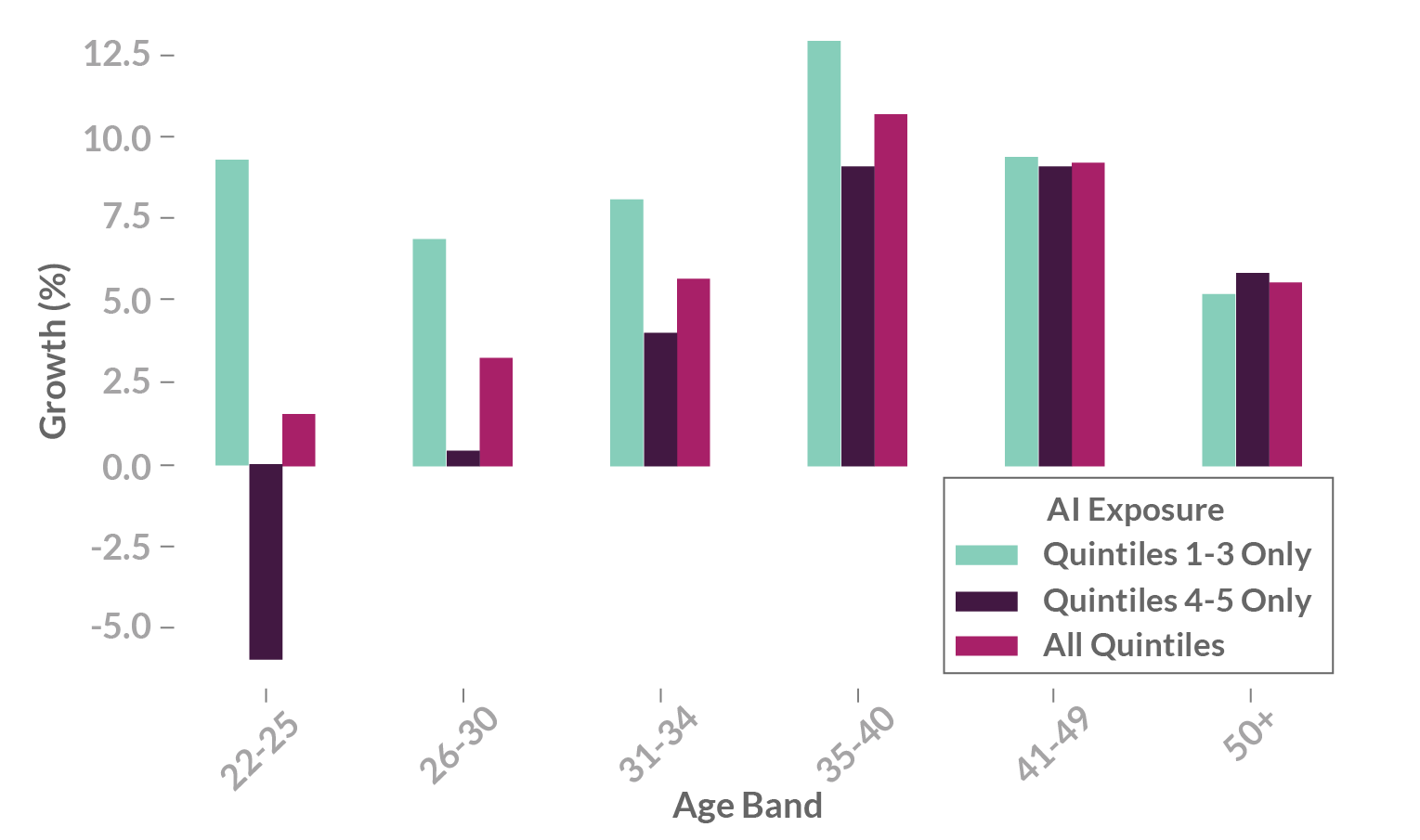
The reduction in early-career employment has been most pronounced in occupations with the highest AI exposure scores (quintiles 4–5)

Meanwhile, employment levels continue to rise for older workers in these highly exposed occupations. The challenges recent graduates face in securing knowledge-based employment have also been highlighted anecdotally in several media reports.

Source: Brynjolfsson et al. (2025)

Growth Decomposition by Age Band

05 growth decomp age band
Scroll to Top